
Buying an overhead bridge crane is rarely a one-size-fits-all decision. A warehouse moving palletized loads, a fabrication shop turning plate and beams, and a heavy maintenance bay handling motors or molds each place different demands on an overhead travelling crane, the runway system, and the supporting warehouse steel structure or steel structure workshop. The smartest projects start with a clear comparison: what you need today, what you may need tomorrow, and what your budget can realistically support without sacrificing crane maintenance and safety devices, reliability, or uptime.
This guide compares common material handling crane configurations—including options you’ll see as an overhead crane for sale from a crane manufacturer China or local supplier—and the steel structure solutions that make them work in real buildings. It focuses on practical trade-offs—capacity versus span, speed versus control, and initial cost versus lifecycle value—so you can select an EOT crane approach that fits your operation rather than forcing your operation to fit the crane.
Define the job first: loads, duty cycle, and workflow
Before comparing models or quotes for an overhead travelling crane, define the lifting “job” in operational terms. Two EOT crane systems with the same rated capacity can perform very differently depending on how often they lift, how far they travel on the runway, and how precisely the load must be positioned. Duty cycle is the hidden driver of cost: a crane that runs all day needs different motors, brakes, controls, and structural margins than one used occasionally, and those choices affect both the crane and the supporting steel structure.
- Maximum load and typical load: design around the heaviest lift, but optimize for what you move daily.
- Lift height and hook approach: low headroom buildings may require special trolley/hoist arrangements.
- Span and runway length: long spans increase girder size and influence building steel.
- Handling method: single-hook lifts, tandem lifts, rotating loads, or grabs/magnets change the spec.
- Environment: heat, dust, corrosive air, or outdoor exposure affects components and coatings.
Map the workflow, not just the load, because the material handling crane becomes part of your production flow. If the overhead bridge crane is a bottleneck between machining and assembly, higher travel speeds and better control may pay back quickly. If lifts happen near people or expensive equipment, smoother acceleration, anti-sway, and the right crane maintenance and safety devices can be worth more than raw speed. Precision and predictability reduce damage and downtime, which often matters more than shaving a small amount off the purchase price.
Compare crane configurations by need and budget
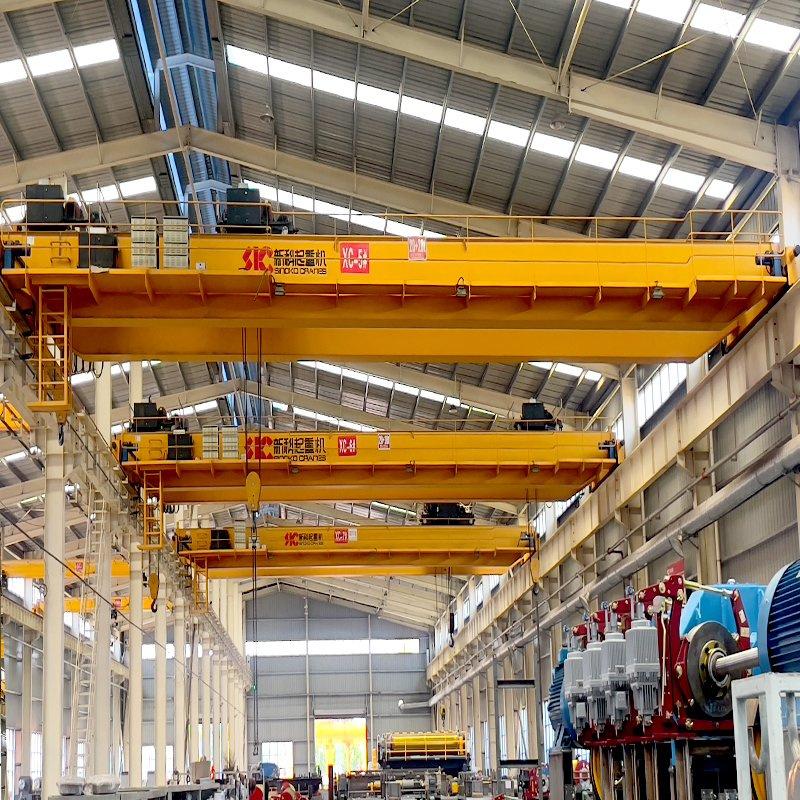
Overhead crane projects typically fall into a few proven configurations of overhead bridge crane and runway. The best choice depends on capacity, span, duty cycle, and building constraints such as roof height and column spacing in a steel structure workshop. Comparing them side by side helps avoid overbuying a double girder overhead crane when a simpler system will do—or underbuilding a runway that can’t support future upgrades.
Single-girder overhead cranes
A single girder overhead crane is a common value choice for light to medium lifting in warehouses, service bays, and general manufacturing. Many top running overhead crane systems in this category reduce dead load on runway beams, which can lower steel tonnage in a warehouse steel structure and speed installation. For moderate duty cycles, a single-girder EOT crane can deliver reliable lifting performance at a lower total installed cost.
The trade-off is reduced hook height in some layouts and less flexibility for very high speeds or specialized trolleys. If future expansion may include heavier loads—moving from a smaller unit toward a 10 ton overhead crane or beyond—it’s worth confirming that the runway, columns, and connections can accept an upgrade later without rebuilding the steel structure.
Double-girder bridge cranes
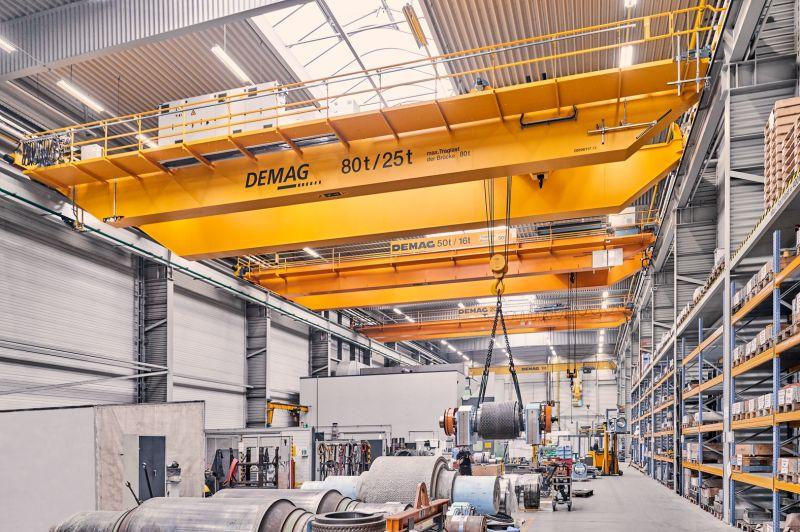
For higher capacities, longer spans, higher classifications, or demanding production schedules, a double girder overhead crane provides a strong platform. These overhead bridge crane designs typically offer better hook approach and can accommodate more robust hoists, walkways, and maintenance access. When uptime is critical, double-girder designs often deliver better serviceability and long-term performance, especially in heavy-duty applications.
The initial investment is higher, and the supporting runway and steel structure workshop framing can be more substantial—especially as capacity climbs from mid-range units toward a 100 ton overhead crane. However, in heavy fabrication, steel service centers, or continuous operations, the lifecycle cost can be lower due to durability, better access for crane maintenance and safety devices, and fewer maintenance disruptions.
Under-running (underslung) cranes
An underhung bridge crane (under-running/underslung) travels on the bottom flange of runway beams and can be a practical solution when existing building columns cannot support top running overhead crane runway loads or when coverage needs to be tight to the structure. In constrained facilities, this style of overhead travelling crane can provide efficient coverage for lighter capacities and shorter spans without major changes to the building frame.
Underslung systems are not the best fit for very heavy loads or long spans, and runway alignment becomes especially important for smooth travel and wheel life. If your budget is tight and loads are modest, an underhung bridge crane can be a cost-effective way to add overhead lifting capability while keeping steel reinforcement and installation work under control.
Monorails and workstation systems
When the task is repetitive movement along a fixed path—loading a machine, transferring parts between stations, or moving along an assembly line—a monorail or workstation material handling crane can outperform a full overhead bridge crane on cost and simplicity. These systems shine when loads are lighter and the travel pattern is predictable, and they can be integrated into a steel structure workshop layout to support specific process lanes.
The limitation is coverage: you gain efficiency on a route, not across a whole bay like an overhead travelling crane. Many facilities use workstation lifting for frequent light handling and reserve the main EOT crane for occasional heavy lifts, balancing capital cost with productivity while keeping runway and building steel sized appropriately.
Steel structure solutions: runway, columns, and building integration
A crane is only as good as the structure that supports it, whether you’re installing an overhead bridge crane in a new warehouse steel structure or retrofitting an existing factory bay. In new builds, the most economical approach is often to design the building frame, crane runway beams, and crane rails together for the intended EOT crane duty. In retrofits, the goal is to add crane capability while minimizing disruption and avoiding surprises in foundation or column capacity.
Common structure approaches for overhead travelling crane runways include:
- Dedicated runway beams on building columns: efficient when the original frame was designed for crane loads.
- Freestanding runway structures: independent columns and beams when the building cannot carry crane forces.
- Braced frames and portal reinforcements: targeted strengthening to support lateral loads and surge forces.
- Crane rail and alignment packages: precision installation reduces wheel wear and improves travel smoothness.
Budget comparisons often overlook that structural steel, foundations, and installation can rival the overhead crane for sale price. A lower-cost single girder overhead crane paired with expensive structural modifications may lose its advantage. Conversely, a slightly higher crane investment—such as choosing the right top running overhead crane arrangement or optimizing girder weight—can reduce runway steel and simplify installation. Total installed cost is the number that matters, not the crane price alone.
For warehouses, pay special attention to clearances that affect an overhead bridge crane: sprinklers, lighting, HVAC, and racking layouts can force compromises on hook height or travel paths. For factories, consider how runway columns and bracing in a steel structure workshop interact with equipment placement and forklift lanes. For heavy-lift bays, verify floor loading and foundation capacity early—especially if a freestanding runway is planned for higher capacities such as a 100 ton overhead crane.
What drives price: where to save and where not to
Comparing solutions for different budgets works best when you separate “must-haves” from “nice-to-haves” on an overhead travelling crane project. Some cost reductions are smart; others simply shift cost into maintenance, downtime, or risk—especially when the crane, runway, and warehouse steel structure are treated as separate decisions instead of one integrated system.
Areas where value engineering can make sense on an overhead bridge crane package:
Choosing a single girder overhead crane design when duty cycle and headroom allow.
Selecting practical speeds and controls for the workflow rather than maximum performance on the EOT crane.
Standardizing on proven components to simplify spares, troubleshooting, and crane maintenance and safety devices support.
Planning expansion-ready runway capacity even if the first 10 ton overhead crane is smaller than a future upgrade.
Areas where cutting corners is rarely worth it on any material handling crane:
Safety devices, braking performance, and load control should match the application, especially where people work under the overhead bridge crane or where loads are high value. For hazardous areas, the correct explosion proof overhead crane specification is a requirement, not an upgrade. Similarly, poor runway alignment and under-specified electrical systems can create chronic problems—wheel wear, skewing, nuisance trips, and inconsistent performance—that cost more than the initial savings.
Consider the cost of downtime in your facility: if a stopped overhead travelling crane halts production, investing in higher-quality components, better diagnostics, and easier maintenance access can be the most budget-friendly choice over the equipment’s life. For specialized handling, selecting the right attachment—such as a grab overhead crane for bulk materials or a magnetic overhead crane for steel plate—can also reduce handling time and improve safety when paired with the correct controls and interlocks.
From specification to commissioning: a practical selection checklist
Once you’ve narrowed the configuration—whether a top running overhead crane, underhung bridge crane, single girder overhead crane, or double girder overhead crane—use a simple checklist to keep the project aligned from design through installation. This reduces change orders and helps you compare proposals fairly when evaluating an overhead crane for sale from different suppliers.
Confirm the lifting envelope : span, runway length, lift height, hook approaches, and any obstructions.
Match the crane classification to real usage, including peak periods and future growth.
Define control style: pendant, radio remote, or cabin, based on visibility and safety.
Specify power supply, festooning, conductor bars, and any special electrical requirements.
Align on coatings, corrosion protection, and environmental sealing where needed.
Plan acceptance testing, operator training, and maintenance documentation at handover.
A well-chosen overhead bridge crane system is more than lifting capacity—it’s a production tool integrated with your runway and steel structure workshop or warehouse steel structure. By comparing EOT crane configurations and steel structure options through the lens of your workflow and budget, you can reach a solution that delivers safe handling, dependable uptime, and room to grow without paying for capabilities you’ll never use.