
Moving heavy loads efficiently is a daily requirement in warehouses, factories, and workshops, and an industrial overhead crane is often the most reliable way to do it. The right overhead crane for sale can reduce handling time, improve operator safety, and protect valuable inventory and equipment. Whether you need a compact single girder overhead crane for a workshop maintenance bay or a heavy-duty double girder overhead crane for production, success comes from matching the overhead bridge crane design to your building, duty cycle, and process flow. For a broader overview of available lifting solutions, visit the Overhead Crane Supplier home page.
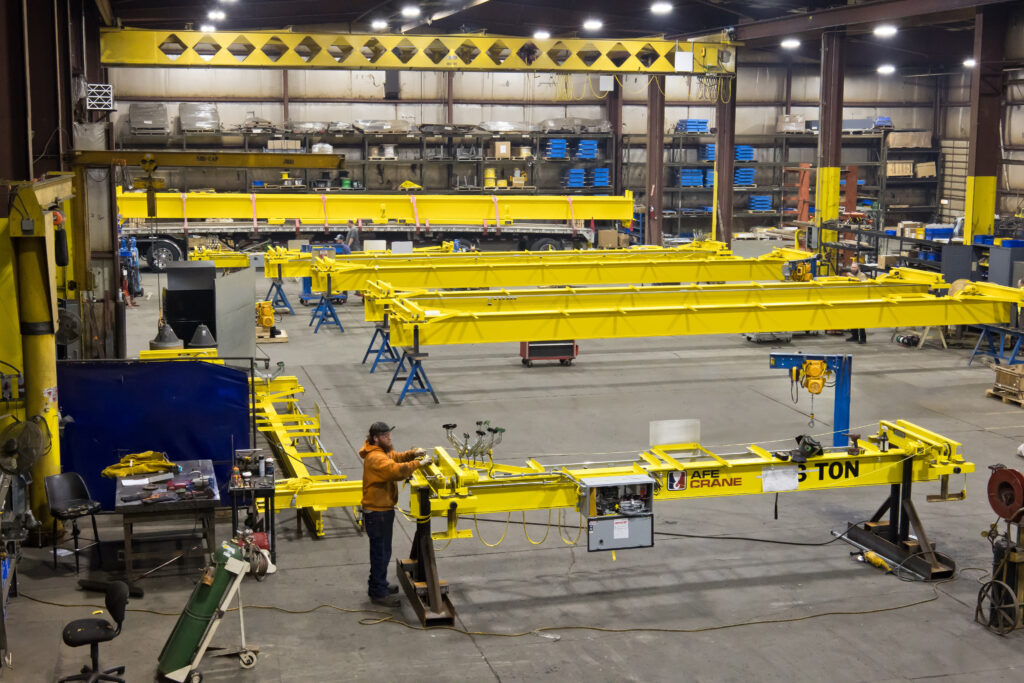
Industrial overhead cranes—often called an EOT crane, overhead travelling crane, or overhead bridge crane—combine a runway, bridge, trolley, and hoist to lift and transport loads across a defined area. A well-engineered solution from an overhead crane manufacturer is more than lifting capacity: it is about repeatable positioning, stable travel, and long-term reliability under real working conditions in a warehouse overhead crane bay or a workshop overhead crane line.
Overhead crane types and where each one fits
Most projects start with a simple question: what industrial overhead crane type best supports your operations? Capacity, span, lift height, and duty class matter, but so do the load characteristics—such as magnetic handling, bulk handling with a grab overhead crane, or hazardous processes requiring an explosion proof overhead crane—and the environment found in factories, warehouses, and workshops.
| Crane type | Typical use | Key advantage | Common considerations |
|---|---|---|---|
| Single-girder EOT/bridge crane | Warehouses, light manufacturing, maintenance shops | Cost-effective coverage of large bays | Lower max capacity than double-girder; hook approach may be limited |
| Double-girder EOT/bridge crane | Heavy fabrication, steel service centers, high-duty production | Higher capacity and better hook height potential | Heavier structure; runway and building loads must be verified |
| Explosion-proof overhead crane | Chemical plants, paint lines, battery rooms, grain handling areas | Designed to reduce ignition risk in classified zones | Requires zone classification and compliant electrical components |
| Magnetic overhead crane | Scrap yards, plate handling, billet and bar movement | Fast handling of ferrous loads with fewer rigging steps | Power supply, magnet selection, and load drop protection planning |
A single girder overhead crane is popular where loads are moderate and the goal is dependable lifting without overbuilding, such as a warehouse overhead crane aisle or a workshop overhead crane bay. A double girder overhead crane is typically chosen for higher capacities and demanding duty cycles—ranging from a 10 ton overhead crane for daily production lifting to a 100 ton overhead crane for heavy fabrication—where structural stiffness and precise trolley travel improve productivity. Explosion proof overhead crane solutions require careful selection of motors, brakes, control panels, and wiring methods to match the hazardous area classification, while a magnetic overhead crane speeds ferrous handling but demands disciplined power management and safe load control.
How to specify a crane that matches your process
Buying an overhead crane is easiest when the specification reflects how your team actually works and how the industrial overhead crane will be installed. Start with the load: not only the heaviest item, but also typical loads, lifting frequency, and how often the EOT crane runs near maximum capacity. Then consider the building: runway length, available headroom, column spacing, and whether a top running overhead crane runway or an underhung bridge crane configuration best fits the structure and clearances.
.jfif)
- Rated capacity and load spectrum: include below-the-hook devices such as magnets, grabs, or spreader beams.
- Span and runway length: confirm clearances at doors, racks, machines, and maintenance zones.
- Lift height and hook approach: ensure you can place loads where needed without re-handling.
- Duty class and travel speeds: align with production takt time and shift patterns.
- Power and controls: pendant, radio remote, or cabin control based on visibility and workflow.
- Environment: temperature, dust, corrosive exposure, and any classified/explosive areas.
Control choice influences both safety and efficiency for any overhead travelling crane installation. Pendant control is straightforward and economical for a standard overhead bridge crane, while radio remote can improve visibility and keep operators away from pinch points in a busy warehouse overhead crane zone. For complex handling or long travel distances on a top running overhead crane runway, a cabin control arrangement may offer better ergonomics and line-of-sight; in all cases, prioritize operator safety through emergency stops, overload protection, limit switches, and clearly defined travel zones.
Steel structure solutions that complete the lifting system
A crane performs only as well as the structure supporting it, so steel structure workshop planning is part of the overhead crane system—not an afterthought. Many facilities need more than a bridge and hoist; they need a complete runway and steel framework designed to carry vertical loads, horizontal forces from acceleration, and impacts from end stops for an industrial overhead crane. For new builds, overhead bridge crane loads should be integrated early so columns, bracing, and foundations are sized correctly, and for retrofits, a site survey helps confirm existing steel capacity and alignment for an EOT crane runway.
Steel structure solutions can include runway beams, columns, bracket supports, maintenance platforms, and freestanding runway frames where building attachment is not feasible for an overhead travelling crane. Proper alignment of rails and runway beams reduces wheel wear and improves smooth travel for a top running overhead crane, while stable support is equally important for an underhung bridge crane that relies on accurate track and hanger geometry. When a warehouse layout changes, modular steel structure workshop solutions can help expand overhead crane coverage without rebuilding the entire facility.
| Steel structure element | What it does | When it’s most useful |
|---|---|---|
| Runway beams and rails | Provide the travel path for end trucks | Any bridge crane installation; critical in long bays |
| Column brackets and corbels | Transfer crane loads into building columns | Retrofits where roof steel is not designed for crane loads |
| Freestanding runway frames | Create a self-supporting crane runway | Leased buildings, light industrial units, or weak existing structures |
| Maintenance walkways and platforms | Enable safe inspection and service access | High-duty cranes, tall buildings, or sites with strict safety rules |
Quality, compliance, and service that protect your investment
Industrial lifting equipment is a long-term asset, and choosing an overhead crane manufacturer should be based on more than the initial quote for an overhead crane for sale. Lifecycle performance depends on component quality, documentation, and the availability of service support for your industrial overhead crane. A professional supplier typically provides engineering drawings, load charts, wiring diagrams, and commissioning guidance for the EOT crane and runway, and for an explosion proof overhead crane, compliance documentation and traceable components are essential.
Reliability comes from disciplined engineering choices in the overhead bridge crane design: correct wheel loads, adequate motor torque, robust braking, and protection against misalignment and shock loading. In magnetic overhead crane applications, attention to power interruption scenarios is crucial so the load remains controlled during brief disturbances, and for a grab overhead crane handling bulk material, hoist selection and duty rating must match the real cycle. In explosion proof overhead crane projects, every electrical and control element must match the site’s classification and inspection requirements.
Service planning should be part of the purchase decision for any overhead travelling crane system, from a 10 ton overhead crane in a workshop to a 100 ton overhead crane in heavy production. Spare parts availability, clear maintenance intervals, and responsive technical support can reduce downtime dramatically for an industrial overhead crane. A bridge crane that is easy to inspect—through accessible gearboxes, centralized lubrication points, and logical cable routing—often outperforms a more complex system that is difficult to maintain.
Practical buying checklist for overhead cranes
When comparing offers for an overhead crane for sale, look beyond headline capacity and price and confirm the exact crane configuration. Verify what is included for the industrial overhead crane package: runway system scope, electrification, controls, safety devices, and commissioning for the EOT crane or overhead bridge crane. Ask how the overhead crane manufacturer validates wheel loads and runway reactions for a top running overhead crane or underhung bridge crane, and how they will support installation and operator training.
The best outcome is an industrial overhead crane system that fits your building, matches your duty cycle, and supports safe material flow for years in a warehouse overhead crane bay or steel structure workshop. With the right combination of overhead crane design—single girder overhead crane or double girder overhead crane—and properly engineered runway steel structure solutions, warehouses and workshops gain faster handling, cleaner aisles, and more predictable operations without compromising safety or compliance.