
Selecting the right overhead crane is one of the most important decisions for any industrial facility that relies on lifting and material handling. The correct crane improves workflow, reduces downtime, enhances workplace safety, and supports long-term productivity. The wrong choice can create bottlenecks, increase maintenance costs, and limit operational efficiency. Because every plant, warehouse, workshop, and production line has different requirements, choosing an overhead crane should always begin with a clear understanding of how the equipment will be used in daily operations.
The first factor to evaluate is lifting capacity. Every overhead crane must be matched to the maximum load it will handle, but it is not enough to focus only on the heaviest single item. You should also think about the frequency of lifts, load distribution, and whether materials require precise positioning. A facility that moves light loads constantly may need a different solution than one that lifts heavy machinery parts only a few times per shift. Matching crane capacity to actual operating conditions helps prevent underperformance and unnecessary overspending.

Another key consideration is the type of overhead crane that best fits the building and production layout. Single girder overhead cranes are often a practical option for lighter to moderate lifting tasks, especially when cost efficiency and simplified installation are priorities. Double girder overhead cranes are usually preferred for heavier capacities, wider spans, and applications requiring higher lifting heights. In some facilities, top running and under running systems may also need to be compared based on runway support, ceiling clearance, and available structural design.
Span and lifting height also play a major role in crane selection. The crane should cover the required working area without wasting structure or restricting movement. If the span is too narrow, material transfer becomes inconvenient. If the lift height is insufficient, the crane may not clear machines, storage racks, or production equipment. These measurements must be coordinated with the existing building dimensions and the movement path of materials from one station to another. A well-matched crane layout supports smoother industrial operations from the start.
Important Factors to Compare Before Choosing a Crane
| Factor | Why It Matters |
|---|---|
| Load Capacity | Determines whether the crane can safely handle routine and peak lifting demands. |
| Crane Type | Affects lifting performance, structure requirements, and installation cost. |
| Span and Lift Height | Ensures full coverage of the work area and proper material clearance. |
| Duty Cycle | Shows how intensively the crane will operate and influences component durability. |
Duty cycle is often overlooked, yet it has a direct impact on performance and service life. Industrial operations with frequent starts, stops, and repetitive lifting place much greater demands on motors, brakes, hoists, and electrical components than occasional lifting work. Choosing a crane with the proper duty classification helps ensure reliable operation under real production conditions. For high-volume facilities, this can make the difference between smooth output and costly interruptions caused by premature wear.
The working environment should also influence your decision. Temperature, humidity, dust, corrosive fumes, and outdoor exposure can all affect crane design and material selection. A crane operating in a steel workshop, foundry, paper mill, or chemical plant may require additional protection, specialized components, or reinforced structural features. Environmental conditions should never be treated as a secondary concern, because they directly affect both safety and long-term maintenance requirements.
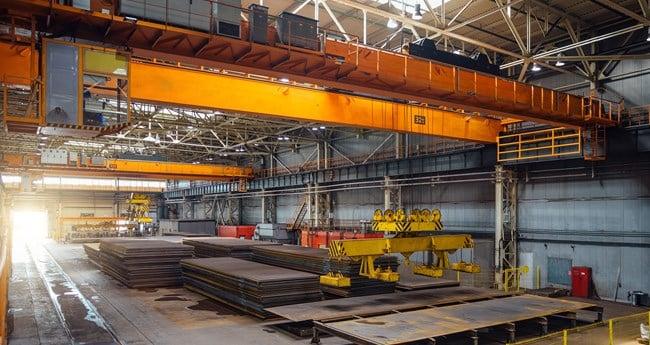
Control method is another practical detail that shapes efficiency. Depending on the application, the crane may use pendant control, wireless remote control, or cabin operation. A simple workshop may benefit from an easy-to-use remote system, while a larger industrial plant may require more advanced controls for accuracy and coordination. The right control setup can improve operator comfort, visibility, and responsiveness during material handling tasks.
Maintenance access should be considered before installation rather than after problems appear. An efficient overhead crane is not only powerful; it is also easy to inspect, service, and keep in proper operating condition. Facilities should think about spare part availability, access to key components, and whether the crane supplier can provide technical support when needed. A dependable service plan helps protect production schedules and extends equipment life.
Careful planning at the selection stage usually leads to fewer adjustments, smoother installation, and better performance once the crane is fully integrated into production.
In the end, choosing the right overhead crane is about aligning technical specifications with operational goals. Capacity, span, lifting height, duty cycle, building structure, and working environment all need to fit together as part of one practical solution. When the crane is selected carefully, it becomes more than lifting equipment. It becomes a valuable part of an efficient industrial system that supports safer operations, better productivity, and stronger long-term performance.